

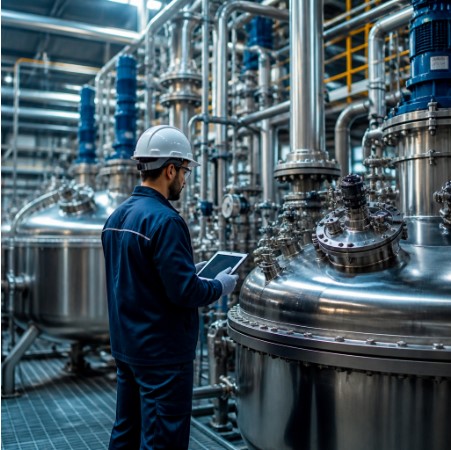

In industrial process engineering, few decisions carry as much long-term consequence as determining the right reactor size for a given application. Whether you are scaling up from a pilot plant or designing a full-scale production facility from scratch, understanding the principles behind reactor sizing is essential to achieving safe, efficient, and cost-effective operations. Undersized reactors lead to production bottlenecks and quality inconsistencies, while oversized systems waste capital, energy, and maintenance resources. Getting this balance right requires a methodical approach grounded in both chemical kinetics and practical engineering judgment.
Why Reactor Sizing Is a Critical Engineering Decision
The sizing of a chemical reactor is not simply a matter of calculating volume. It involves a complex interplay of reaction kinetics, heat and mass transfer, residence time distribution, feed composition, and desired conversion rates. Engineers must also account for safety margins, regulatory compliance, and the potential for future capacity expansion. A reactor that is correctly sized at the outset can dramatically reduce operating costs over its lifetime, while one that is poorly specified may require expensive retrofitting or even replacement within a few years of commissioning.
Beyond the technical parameters, reactor sizing decisions also affect downstream processes. The output rate, product concentration, and byproduct formation all depend on how well the reactor is matched to the process chemistry. This is why experienced process engineers treat reactor design as a holistic exercise rather than an isolated calculation.
Core Principles Behind Reactor Volume Calculations
Residence Time and Conversion Rate
One of the most fundamental concepts in reactor sizing is residence time — the average amount of time that reactants spend inside the reactor. For a given reaction rate and desired conversion, a longer residence time generally means a larger reactor volume. The relationship between these variables is described by design equations specific to the reactor type, whether it is a batch reactor, a continuous stirred-tank reactor (CSTR), or a plug flow reactor (PFR). Each configuration has distinct advantages depending on the nature of the reaction and the production requirements.
Reaction Kinetics and Rate Laws
Accurate kinetic data is the backbone of any reliable reactor sizing exercise. Rate laws describe how the speed of a chemical reaction depends on the concentration of reactants, temperature, and catalysts. Without precise kinetic parameters — often derived from laboratory or pilot-scale experiments — even the most sophisticated design equations will yield unreliable results. Engineers typically conduct kinetic studies under controlled conditions and then apply correction factors to account for real-world variability in feed quality and operating conditions.
Heat Transfer and Temperature Control
Exothermic and endothermic reactions both present unique challenges for reactor design. In exothermic systems, insufficient heat removal can lead to runaway reactions and catastrophic failures. In endothermic processes, inadequate heat supply results in incomplete conversion and poor product quality. The reactor’s heat transfer surface area, jacket design, and internal coil configuration must all be sized in proportion to the thermal load of the reaction. This thermal analysis often runs parallel to the volumetric sizing calculation and can become the limiting design factor in high-energy reactions.
Practical Considerations When Sizing for Industrial Scale
Translating laboratory results to industrial-scale reactor design is rarely straightforward. Scale-up introduces new challenges related to mixing efficiency, pressure drop, catalyst deactivation, and fouling. A reactor that performs flawlessly at the bench scale may exhibit entirely different behavior when the volume increases by several orders of magnitude. This is why pilot plant testing is often an indispensable intermediate step, allowing engineers to identify and resolve scale-up issues before committing to full capital expenditure.
Material selection is another practical concern. The reactor vessel must be compatible with the process chemistry, capable of withstanding operating pressures and temperatures, and resistant to corrosion over its intended service life. Stainless steel, Hastelloy, glass-lined carbon steel, and various polymer-lined options each have their place depending on the specific chemical environment. Choosing the wrong material can lead to contamination, premature failure, and significant unplanned downtime.
According to recent research published in the journal Processes, advances in computational modeling and simulation are increasingly enabling engineers to predict reactor behavior with greater accuracy before physical construction begins. These tools reduce the risk associated with scale-up and allow for more confident decision-making during the design phase.
Energy Infrastructure and Backup Power in Process Facilities
Industrial process plants are energy-intensive environments where unplanned power outages can have serious consequences — from ruined batches and damaged equipment to safety hazards involving pressurized systems and reactive chemicals. Ensuring reliable backup power is therefore an integral part of facility planning. For plant managers evaluating their options, a thorough home generator buying guide for backup power decisions can offer useful foundational knowledge about generator sizing, fuel types, and load calculations — principles that scale meaningfully to industrial contexts as well.
About International Process Plants
International Process Plants is a globally recognized resource for process engineering expertise, offering detailed technical guidance on reactor design, process equipment selection, and plant optimization. Their comprehensive resources help engineers and plant operators make well-informed decisions at every stage of the design and commissioning process. With a focus on practical, application-driven knowledge, the platform serves professionals across the chemical, petrochemical, pharmaceutical, and specialty materials industries.
Understanding chemical reactor capacity is one of the most frequently referenced topics on the platform, reflecting the central importance of this subject in process plant engineering. Their guidance covers everything from basic design equations to advanced considerations for multi-phase and catalytic systems, making it a valuable reference for both early-career engineers and seasoned professionals tackling complex scale-up challenges.
Integrating Reactor Sizing Into the Broader Plant Design Process
Reactor sizing does not occur in isolation. It must be integrated with the design of upstream feed preparation systems, downstream separation and purification units, utilities infrastructure, and safety systems. A change in reactor volume or operating conditions can cascade through the entire process flowsheet, affecting heat exchanger duties, pump capacities, and storage requirements. This interconnectedness underscores the importance of using process simulation software and maintaining close collaboration between different engineering disciplines throughout the design phase.
Lifecycle cost analysis is also an important tool in reactor sizing decisions. The lowest-cost reactor at the point of purchase may not be the most economical choice over a 20-year operating horizon if it requires frequent maintenance, consumes excessive energy, or limits production flexibility. Engineers who take a total cost of ownership perspective tend to make more robust design choices that serve their organizations well over the long term.
Conclusion
Sizing a chemical reactor correctly is both a science and an art. It demands rigorous application of chemical engineering principles, careful interpretation of kinetic and thermodynamic data, and sound practical judgment developed through experience. As process industries continue to evolve — driven by demands for greater efficiency, sustainability, and flexibility — the ability to design reactors that are precisely matched to their intended purpose becomes ever more valuable. Investing the time and expertise to get reactor sizing right at the outset pays dividends throughout the entire operational life of the plant.