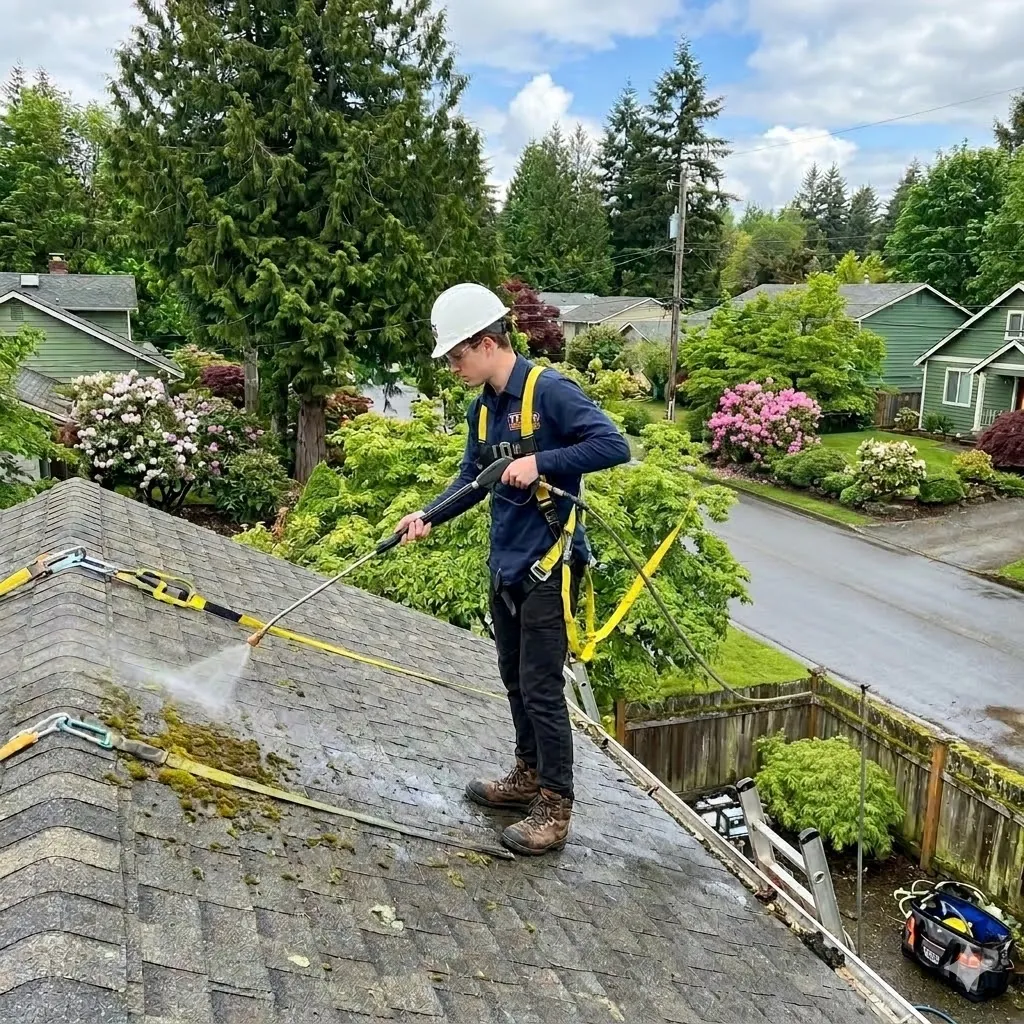
A homeowner in Alderwood Manor notices green moss spreading across the shaded side of the roof. A few leaves have collected near the gutters, but nothing looks particularly urgent. Then autumn rain arrives, and water begins spilling over one corner of the house. The problem isn’t necessarily the moss. A blocked drainage channel may be directing water somewhere it shouldn’t go.
Situations like this explain why roof maintenance deserves attention before winter.
Alderwood Manor’s established residential areas, mature trees, and damp Pacific Northwest climate create maintenance challenges that vary from property to property. Some roofs collect evergreen needles throughout the year, while others experience heavy seasonal leaf accumulation.
Understanding what to inspect, what to clean, and what requires professional repair can help homeowners prepare their roofs without spending money on unnecessary services.
Why Roof Cleaning in Alderwood Manor Requires a Local Approach
Alderwood Manor sits within southwestern Snohomish County, near Lynnwood and Mountlake Terrace. Its residential landscape includes established properties, tree-lined streets, and homes with different roofing ages and designs.
These characteristics influence how roofs handle seasonal moisture.
For example, a house beneath mature Douglas firs or western red cedars may collect needles throughout the year. Another property surrounded by deciduous trees may experience heavier debris accumulation during autumn.
Roof orientation also matters.
North-facing slopes generally receive less direct sunlight, allowing moisture to linger longer. Combined with tree shade, these conditions can encourage moss growth on asphalt shingles.
However, two neighboring homes can have completely different maintenance requirements.
One may need routine gutter cleaning, while another requires moss treatment, valley clearing, and flashing repairs.
The important lesson is simple: evaluate your roof’s actual condition instead of assuming every home needs the same cleaning schedule.
1. Identify Moss Growth Before It Becomes a Bigger Concern
Moss commonly develops on shaded roofing surfaces throughout Western Washington.
Small patches don’t automatically indicate roof failure. However, established moss can retain moisture, interfere with normal drainage, and make underlying roofing defects harder to identify.
Homeowners should distinguish between surface discoloration and actual biological growth.
Dark staining may indicate algae or other surface deposits. Thick green growth with a raised texture generally suggests moss.
These conditions require different evaluations.
When Does Moss Need Professional Attention?
Look for moss that:
- Forms thick patches between asphalt shingles.
- Accumulates along roof valleys.
- Covers large sections beneath overhanging branches.
- Appears alongside curling or deteriorating shingles.
- Returns repeatedly despite previous treatment.
Avoid scraping moss aggressively or using conventional high-pressure washing on asphalt shingles.
Excessive force can dislodge protective granules and damage roofing materials.
A qualified professional should evaluate the roof’s condition and follow manufacturer-approved cleaning recommendations.
Importantly, moss treatment doesn’t repair damaged shingles. If cleaning reveals deterioration, homeowners should address the roofing defect separately.
2. Pay Special Attention to Roof Valleys and Hidden Debris
Roof valleys collect water from adjoining slopes and direct it toward gutters.
Unfortunately, their shape also allows leaves, needles, and small branches to accumulate.
This becomes particularly relevant for Alderwood Manor properties with mature landscaping.
A roof may appear relatively clean from the driveway while a narrow valley behind a dormer contains several inches of compacted debris.
During prolonged rainfall, these obstructions can slow drainage and contribute to water accumulation near vulnerable roofing details.
Why Older Roof Designs Deserve Additional Attention
Some established homes have complex rooflines with multiple intersections, chimneys, and additions.
These features create additional locations where debris can collect.
A homeowner should pay particular attention to roof valleys that receive runoff from several slopes or sit beneath overhanging branches.
Professionals should inspect the valley flashing and surrounding shingles while removing debris.
If they identify damaged flashing, exposed fasteners, or deteriorated materials, cleaning alone won’t solve the problem.
The priority should always be restoring reliable drainage while preserving the roofing system.
3. Check Gutters and Downspouts Before Winter Rain
Gutters perform an essential job: they move roof runoff away from vulnerable parts of the house.
When leaves and needles block them, water may overflow against fascia boards, siding, and foundation areas.
For Alderwood Manor homeowners, gutter maintenance deserves particular attention during autumn.
Evergreen needles can accumulate gradually, while deciduous leaves may create significant blockages within a shorter period.
However, removing debris from gutters addresses only part of the problem.
Follow the Entire Drainage Path
After cleaning, homeowners should verify that water can travel through the downspouts and discharge away from the building.
Consider an established property where landscaping changes have altered the surrounding ground level.
A downspout that once discharged water away from the foundation may now direct runoff toward a garden bed or poorly draining area.
Even clean gutters cannot compensate for unsuitable discharge arrangements.
When arranging roof cleaning in Alderwood Manor, homeowners should consider having the contractor inspect accessible gutter outlets and identify obvious drainage concerns.
This coordinated approach can reveal problems that separate cleaning appointments might overlook.
4. Inspect Flashing, Vent Boots, and Aging Roof Components
One of the most valuable aspects of professional roof maintenance is identifying problems that cleaning cannot correct.
Flashing protects vulnerable intersections around chimneys, skylights, roof valleys, and other penetrations.
Vent boots seal areas where plumbing pipes pass through the roofing system.
Over time, exposure to sunlight, temperature changes, and moisture can contribute to deterioration.
Homeowners should watch for:
- Cracked rubber vent boots.
- Loose or damaged flashing.
- Missing or displaced shingles.
- Exposed fasteners around roof penetrations.
- Water stains on attic sheathing.
- Damp insulation near roof openings.
An important distinction: visible moss doesn’t necessarily cause a roof leak.
A damaged vent boot, deteriorated flashing detail, or installation defect may create the actual entry point.
This is why experienced roofing professionals evaluate the surrounding components instead of automatically attributing every moisture problem to moss.
5. Understand How Mature Trees Change Roof Maintenance Needs
Alderwood Manor’s established residential character creates an important maintenance consideration: trees and roofs often share limited space.
Overhanging branches can increase debris accumulation and shade roofing surfaces.
However, tree-related problems don’t always require major pruning.
For example, a cedar near a roof valley may contribute needles throughout the year. A nearby maple may create a concentrated cleanup requirement after autumn leaf fall.
These situations call for different maintenance schedules.
What Should Homeowners Prioritize?
Consider three practical factors:
Debris accumulation: Identify which trees contribute the most material to gutters and valleys.
Sunlight exposure: Observe whether branches keep roof sections shaded for much of the day.
Branch clearance: Check whether branches touch the roof or could damage roofing materials during windy conditions.
A qualified arborist can recommend appropriate pruning without compromising tree health.
For heavily wooded properties, an additional gutter inspection after substantial leaf fall may provide greater value than another complete roof treatment.
6. Choose the Right Cleaning Method for Your Roofing Material
Not every roof-cleaning technique suits every roofing system.
Asphalt shingles, metal roofing, cedar shakes, and other materials have different maintenance requirements.
For asphalt shingles, aggressive pressure washing can remove protective granules or damage shingle surfaces.
Chemical treatments also require careful selection.
Some products may harm landscaping, corrode incompatible materials, or create runoff concerns when workers apply them incorrectly.
Before approving a service, ask the contractor:
- What cleaning method suits the roofing material?
- Does the manufacturer permit the proposed treatment?
- How will workers protect plants and surrounding surfaces?
- Will the contractor inspect damaged roofing components?
- Does the estimate distinguish cleaning from repairs?
These questions help homeowners evaluate service quality without relying solely on price.
Professional roof cleaning in Alderwood Manor should prioritize material compatibility, safe working practices, and long-term roof protection.
7. Know Which Problems Need Immediate Attention
Not every maintenance concern deserves equal urgency.
A lightly stained roof may remain functional for years, while damaged flashing can allow water intrusion during the next significant rainfall.
Homeowners should prioritize problems according to their potential consequences.
Highest Priority: Active Water Problems
Address active leaks, visibly damaged flashing, missing shingles, and serious drainage obstructions promptly.
These conditions may require repairs rather than cleaning.
Next Priority: Heavy Debris and Established Moss
Remove substantial debris from valleys and gutters. Arrange appropriate moss treatment when growth interferes with drainage or roofing condition.
Lower Priority: Cosmetic Discoloration
Surface staining without evidence of deterioration may not require immediate treatment.
This distinction helps homeowners avoid unnecessary services while addressing genuine risks.
8. Create a Practical Winter Roof Maintenance Schedule
Alderwood Manor’s wet winters make consistent maintenance more useful than occasional intensive cleaning.
However, homeowners don’t need to follow an identical schedule every year.
A practical routine includes three checkpoints.
Early autumn: Inspect visible roof conditions, identify moss growth, and check gutters for existing debris.
After substantial leaf fall: Recheck gutters, downspouts, and accessible drainage areas, particularly on properties with deciduous trees.
After significant winter storms: Look for displaced shingles, fallen branches, overflowing gutters, or new signs of moisture intrusion.
Homeowners should perform visual checks from the ground whenever possible.
Avoid climbing onto wet, icy, or steep roofs. Qualified professionals should handle elevated inspections and cleaning.
For older properties, periodically checking accessible attic areas for staining or dampness can also help identify developing moisture problems.
The goal isn’t constant roof cleaning. It’s recognizing changes before minor maintenance concerns become expensive repairs.
Conclusion: Protect the Roof That Protects Your Home
Alderwood Manor homeowners often appreciate the mature trees and established surroundings that give their neighborhoods character. Yet those same features can create ongoing roof maintenance responsibilities.
A shaded roof may need moss treatment. A tree-covered valley may require debris removal. An older roof may need flashing repairs rather than another cleaning appointment.
The difference comes from understanding what the roof needs.
Before winter, focus on the conditions that affect drainage, moisture control, and roofing material integrity. Address existing defects, choose appropriate cleaning methods, and establish a maintenance routine that reflects your property’s surroundings.
Thoughtful roof cleaning in Alderwood Manor isn’t about making every shingle look new.
It’s about preserving the roofing system, protecting the home beneath it, and making informed maintenance decisions that continue to pay off long after winter ends.